
Exploring the Latest Eco-Friendly Nail Products
Eco-friendly nail products have moved from a niche “clean beauty” corner to the main stage of nail art. Today’s formulas aim to reduce harsh solvents, limit controversial ingredients, and improve packaging—without sacrificing opacity, dry time, or wear. This listicle walks through what to buy, what to look for on labels, and how to build a lower-waste routine from prep to removal.
If you like browsing inspiration before you shop, explore design ideas in the gallery at this nail art explore collection. When you’re ready to organize your own looks and save favorites, you can create your free account.
The Best Eco-Friendly Nail Products for Nail Art Right Now (Listicle Picks)
Before the label-reading details, here are the product categories that make the biggest difference. Think of this as a shopping checklist: you can mix brands as long as each item aligns with your priorities (ingredient safety, waste reduction, and performance).
1) “Free-from” and low-odor nail polish formulas
Modern “free-from” polishes focus on removing or reducing certain solvents and plasticizers commonly flagged by consumers. Many also aim for lower odor, which makes at-home nail art more comfortable.
Look for:
- “10-free,” “12-free,” or similar (a starting point—not a guarantee)
- High-opacity pigments that reduce the number of coats
- Brush shapes that allow precise nail art lines and clean edges
Good for nail art because:
- Thin, self-leveling coats help stamping and striping
- You can build gradients without muddying colors
2) Bio-based glitter and plastic-free sparkle alternatives
Traditional glitter is typically microplastic. Eco alternatives include:
- Plant-based cellulose glitter (often from eucalyptus or other sources)
- Mineral shimmer (mica-based) when sourced responsibly
What to check:
- Whether the glitter is certified biodegradable in fresh water and marine environments
- Particle size (chunky glitter can snag and lift if top coat isn’t compatible)
3) Water-based or “peelable” base options for short-term nail art
If you change your nail art frequently, peelable bases can reduce acetone use. They’re not for everyone (some people experience early lifting), but they’re helpful for:
- Photoshoots
- Practice sessions
- Short-term event nails
Tip: Pair with a durable top coat and cap the free edge to increase wear.
4) Fast-dry top coats that minimize rework
Every smudge costs you extra product, cotton, and time. A reliable quick-dry top coat supports sustainability by reducing do-overs.
Look for:
- Good shrink-resistance
- Compatibility with decals, stamps, and glitter
- A brush that doesn’t drag art details
5) Reusable nail art tools (the biggest low-waste win)
Tools are where sustainability is often easiest: switch once, use for years.
Priority upgrades:
- Stainless steel cuticle pusher and nippers
- Glass or crystal nail file (instead of disposable emery boards)
- Silicone nail art mat for mixing colors and cleaning brushes
6) Lower-impact removers and less-waste remover accessories
Acetone works—but it can be drying and often comes with a lot of single-use cotton and foil.
Lower-waste options:
- Refillable pump bottles or glass bottles for remover
- Washable lint-free cloth squares
- Reusable soak-off clips (instead of foil)
If you want more inspiration for how these product choices look in finished sets, browse this curated nail art explore page.
How to Read Labels: “10-Free,” “Bio-Based,” and “Vegan” (Without the Greenwashing)
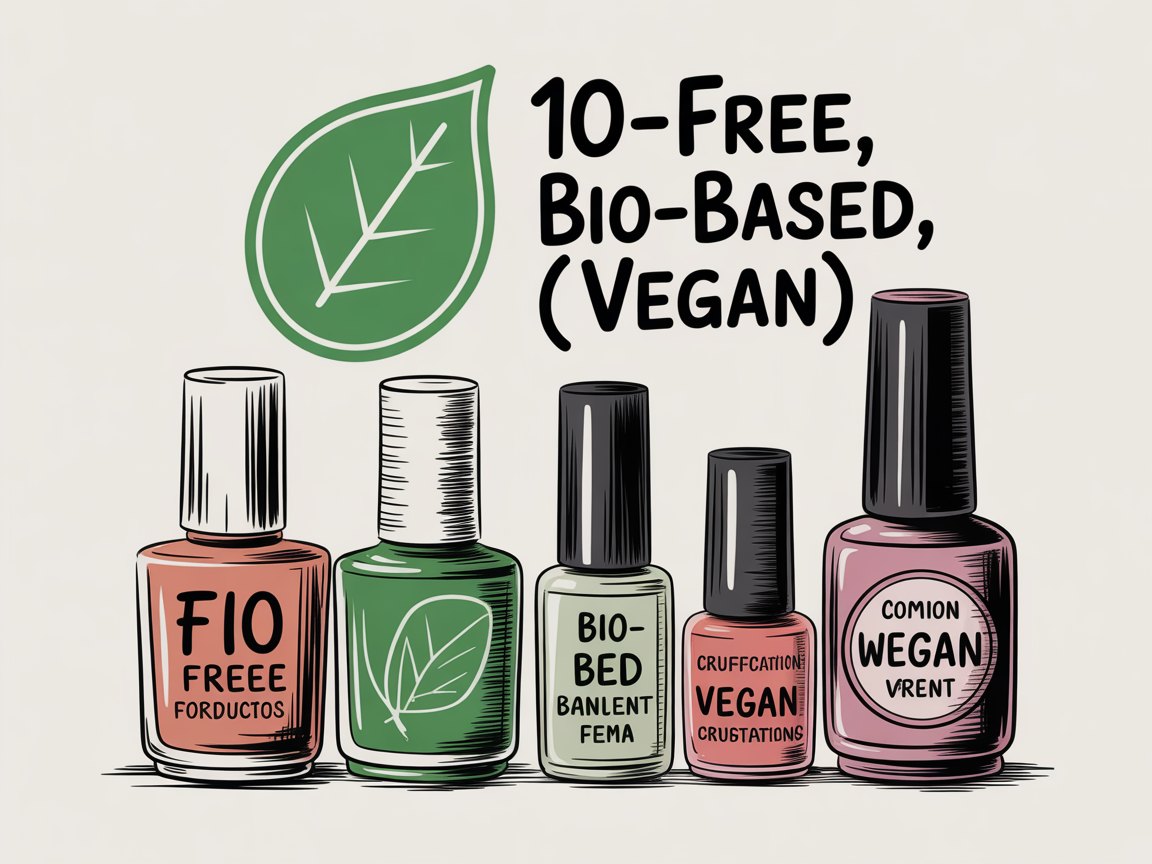
Sustainability labels can be genuinely helpful—or confusing. Here’s a practical way to interpret common terms so you can compare products without feeling like you need a chemistry degree.
Start with what “free-from” does (and doesn’t) mean
“10-free” usually means the brand has removed a list of ten ingredients that consumers commonly avoid. The specific list can vary between brands.
Use it as:
- A quick filter when you’re scanning options
Don’t treat it as:
- A verified environmental certification
- A guarantee of low allergy risk (everyone’s sensitivities differ)
Understand “bio-based” beyond the buzzword
Bio-based typically refers to the origin of certain ingredients (derived from plants or renewable sources) rather than the end-of-life impact.
Questions to ask:
- Does the brand state a percentage of bio-based content?
- Is the packaging also improving (refills, recycled content, minimal plastic)?
- Are performance claims realistic (chip resistance, curing, dry time)?
“Vegan” and “cruelty-free” are different claims
- Vegan: no animal-derived ingredients.
- Cruelty-free: not tested on animals (definitions can vary; look for clear policies).
For eco shoppers, both are relevant, but neither automatically means the formula is low-VOC or biodegradable.
Look for packaging and refill signals
A product can have a “clean” formula but still create excessive waste. Consider:
- Refillable bottles or caps
- Recyclable material where you live
- Minimal secondary packaging (no oversized boxes)
Common greenwashing red flags
- Vague terms like “non-toxic” without specifics
- No ingredient list or no explanation of what “free-from” includes
- “Eco” branding while shipping everything in single-use plastic
A Low-Waste Nail Art Toolkit: Reusable Tools That Replace Disposables
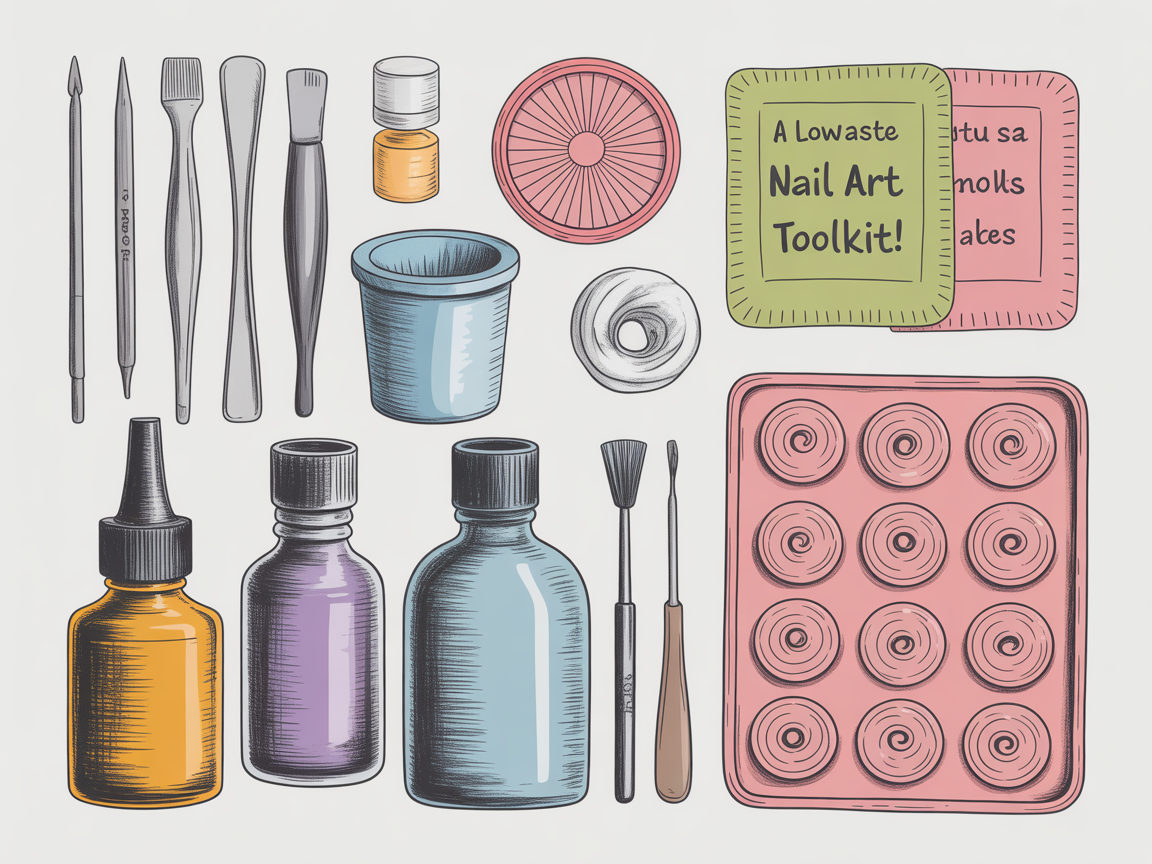
If you want the most impact with the least effort, start with tools. Reusables reduce trash every time you paint, and they often work better than disposable alternatives.
1) Glass/crystal nail file
Why it’s greener:
- Lasts for years when cared for
- Washable and sanitizable
How to use for best results:
- File in one direction to reduce splitting
- Clean with soap and warm water; disinfect as needed
2) Stainless steel cuticle tools
A simple pair can replace countless orange sticks.
Look for:
- A double-ended pusher (flat + rounded)
- A quality nipper with a protective cap
Maintenance tip:
- Wipe with alcohol after use and store dry to prevent corrosion.
3) Silicone nail art mat
This is a quiet sustainability hero.
Benefits:
- Mix custom shades without wasting disposable palettes
- Practice designs and peel off dried polish
- Set down tools without staining your table
4) Washable lint-free cloth squares
Instead of single-use cotton rounds, consider reusable squares.
Best uses:
- Wiping brush handles
- Cleaning up polish around the neck of bottles
- Quick cleanup after stamping
Care tip: Wash separately if heavily stained, and avoid fabric softener which can leave residue.
5) Reusable soak-off clips and a dappen dish
- Clips replace foil wraps for gel/soak-off removal.
- A small glass dappen dish helps you pour only what you need (remover or cleanser), reducing spills.
6) Refillable bottles for remover and cleanser
Refillables encourage buying larger sizes or refill packs and decanting safely.
Safety note:
- Label the bottle clearly
- Keep away from heat and flames
Sustainable Nail Art Routine: Prep, Paint, and Removal With Less Waste
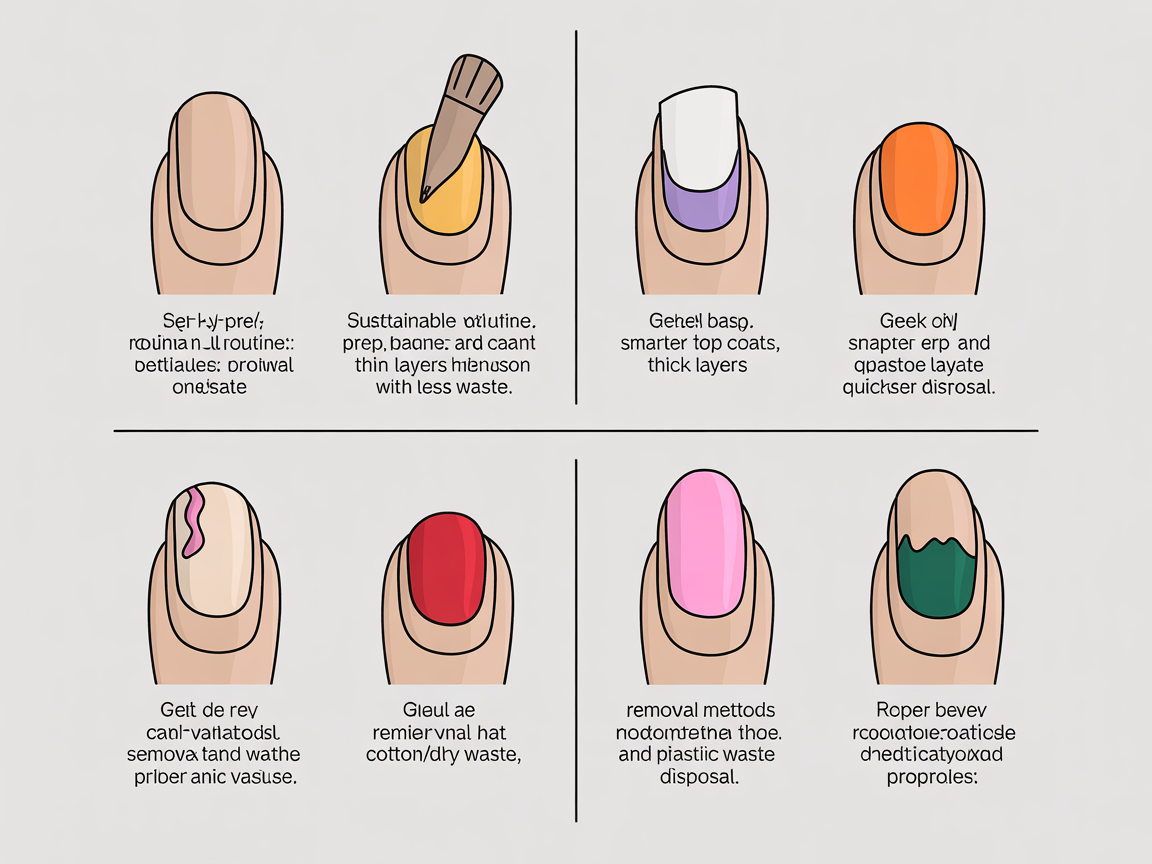
A sustainable routine isn’t about being perfect—it’s about reducing repeat waste. The easiest wins come from using less product per manicure, avoiding unnecessary disposables, and extending wear so you repaint less often.
Step 1: Prep gently to protect nails (and prevent chipping)
When polish chips early, you repaint sooner, which uses more remover, more cloth, and more product.
Low-waste prep checklist:
- Wash hands and dry thoroughly.
- Push back cuticles with a reusable tool (no single-use sticks).
- Lightly buff only if needed; avoid over-buffing.
- Clean the nail plate with a small amount of remover in a dappen dish.
Step 2: Use thin coats and a smart order for nail art
Thin, even coats dry faster and last longer.
A durable order for most nail art looks:
- Base coat
- Two thin color coats
- Nail art (stamping, decals, striping, glitter placement)
- Quick-dry top coat
Waste-saving tips that also improve results:
- Load less polish on the brush; wipe one side of the stem
- Keep bottle necks clean so caps seal properly (prevents thickening)
- Use a silicone mat to test patterns instead of repainting nails
Step 3: Choose lower-waste embellishments
If you love sparkle, try:
- Biodegradable glitter for accents (not full coverage)
- Reusable gems stored in small containers (remove carefully and reuse)
Step 4: Removal with fewer disposables
This is where most manicure waste happens.
Try one of these methods:
- Reusable cloth + remover: Saturate a washable square, press for 10–15 seconds, then wipe.
- Soak-off clips: Use reusable clips with small bits of cloth to hold remover in place.
- Peelable base days: For practice nail art, peel off instead of soaking.
After removal:
- Wash hands
- Apply cuticle oil to reduce dryness
Step 5: Dispose and store responsibly
- Let small amounts of polish dry out before discarding (follow local guidance).
- Keep caps tight and store bottles upright to prevent evaporation.
- Clean tools so they last longer and don’t need replacing.
Conclusion
Eco-friendly nail products make it easier to enjoy nail art while reducing exposure to harsh ingredients and cutting down on single-use waste. Start with a few high-impact swaps—reusable tools, smarter label reading, and low-waste removal—then upgrade polishes and embellishments as you run out of old stock. Over time, your kit becomes lighter, cleaner, and more aligned with the kind of sustainable routine you actually want to keep.