How to Choose French Tip Nails
Compare classic, micro, colored and graphic French tips, then adapt the line, contrast and finish to your nail shape, length and maintenance preferences.
In this guide
What makes a design a French tip
A French tip is a visual design structure: the edge of the nail contrasts with the base. The familiar version pairs a sheer pink or neutral base with a curved white edge, but the same structure can use opaque bases, color, metallic finishes or graphic lines.
French describes the placement of the design, not the product system underneath it. The look may be created on natural nails, an overlay, extensions or press-ons. The most important choices are the width and shape of the tip, the contrast against the base and how much precision you want to maintain as the manicure wears.
French tip design examples
Use these examples to compare line width, placement, contrast and finish. Focus on the design structure you want to borrow rather than treating one image as a specification for every nail.
AI-generated design references. They show a look, not application or product performance.
Classic white French tip
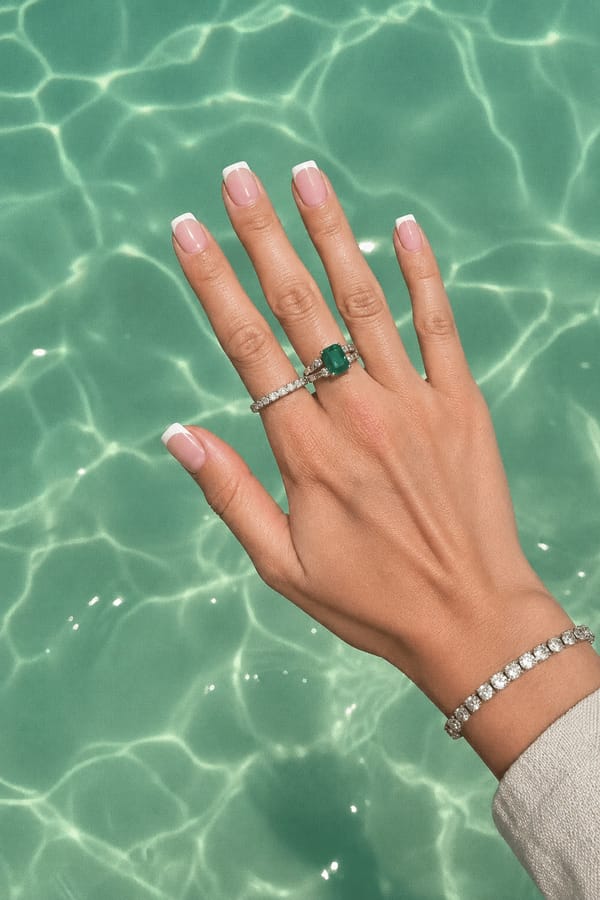
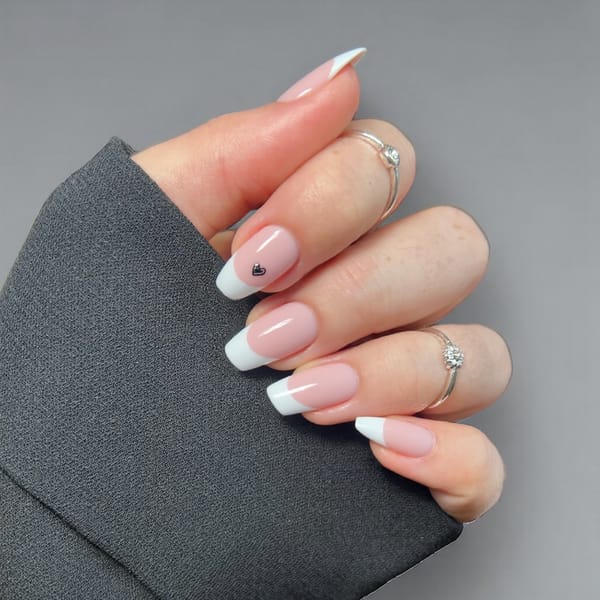
A crisp white edge and soft pink base show the traditional balance on short square nails.
Micro French with an accent
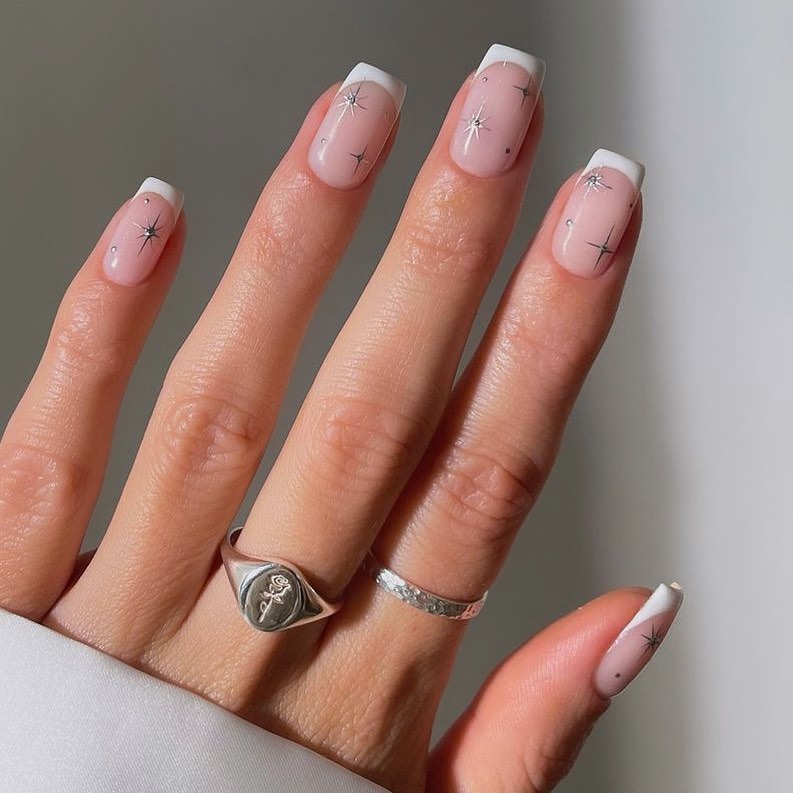
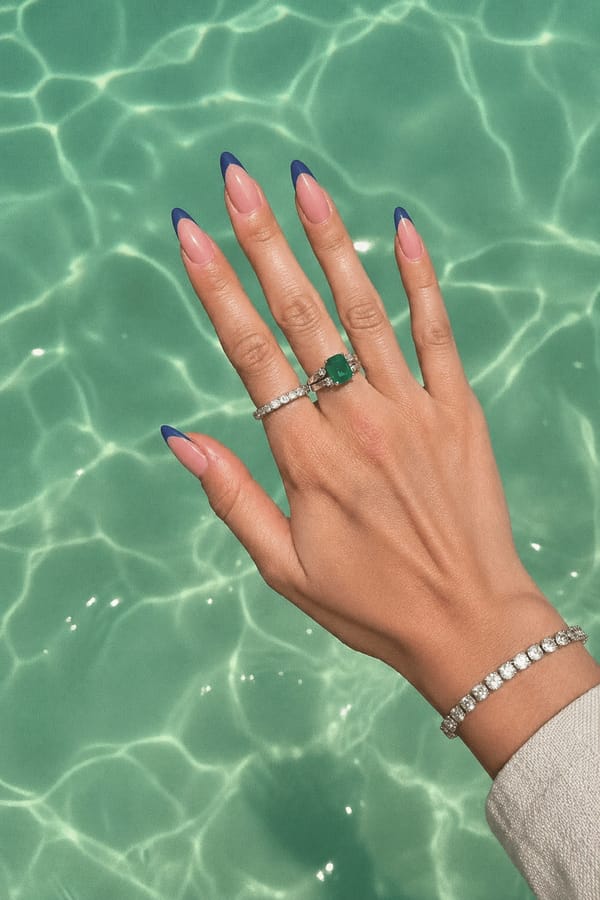
A narrow tip preserves visible base space while one small motif adds detail without changing the overall structure.
High-contrast colored tip
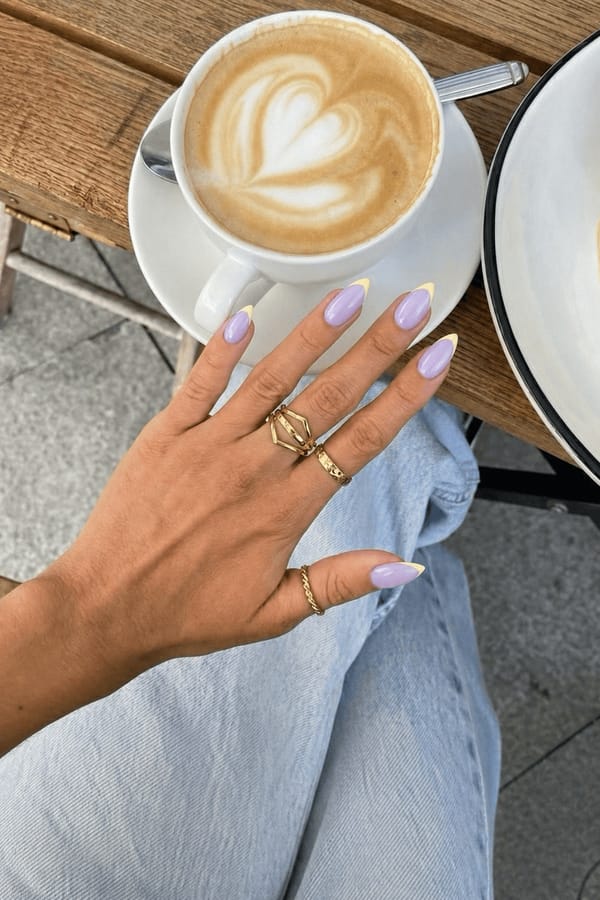
Coral and navy replace the neutral-and-white pairing to make the free edge the strongest visual feature.
Reverse French placement
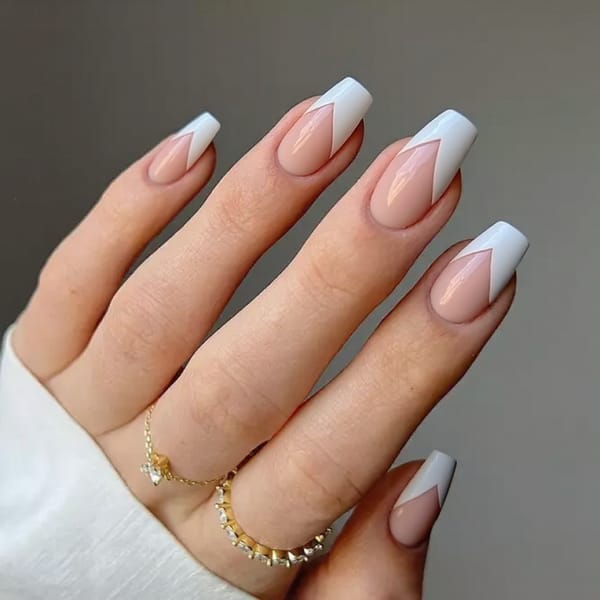
The contrasting curve moves toward the cuticle, demonstrating how placement can change while the framing concept remains.
Geometric French tip
Angular white sections emphasize a pointed silhouette and create a more graphic alternative to a curved smile line.
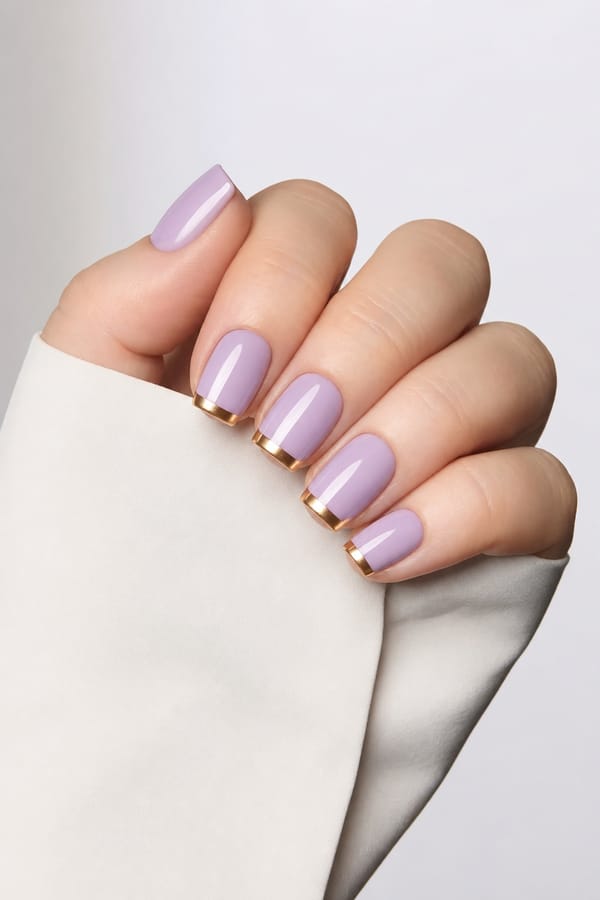
Metallic dipped edge
A reflective gold edge adds finish contrast while keeping the base and tip composition easy to identify.
Six French tip styles and how they differ
Choose the line structure first. Color and finish can then be adjusted without changing the basic composition.
Classic French
A balanced white smile line over a sheer pink, beige or neutral base. A softer white reduces contrast; a bright white creates a sharper edge.
Micro French
A narrow line traces the free edge with minimal coverage. It preserves more visible base on short nails, but the fine line requires precise placement.
Colored French
One shade or a coordinated palette replaces white. Pastels create lower contrast, while black, red, navy or neon tips make the edge the main feature.
Reverse French
The contrasting curve sits near the cuticle instead of the free edge. It keeps the French framing idea while shifting attention to the base of the nail.
Diagonal or V-tip French
Angled lines replace the rounded smile line. A diagonal tip feels asymmetrical, while two meeting angles form a V that can emphasize a pointed or tapered shape.
Double or decorated French
A second line, small motif, glitter edge or single accent nail adds detail. Limiting decoration to one controlled element keeps the tip structure readable.
Adapt the tip to your nail shape and length
There is no single correct pairing. Use the available nail space and the outline of the shape to decide how deep, wide or angular the tip should be.
Short nails
Keep enough base visible so the tip does not dominate the nail. A slim curve, narrow straight edge or small diagonal can work; very detailed art may become difficult to read.
Medium and long nails
More space allows a deeper smile line, a wider block of color, double tips or small motifs. A very wide tip changes the balance toward a color-blocked look rather than a delicate French line.
Square and squoval shapes
A straight or gently curved line echoes the broad free edge. Rounded corners soften the transition, while a crisp horizontal tip produces a more graphic result.
Oval and almond shapes
A curved smile line can follow the taper of the sidewalls. A V-tip or diagonal line can make that taper more prominent without requiring an extremely pointed nail.
Coffin and stiletto shapes
Long tapered shapes provide room for deep curves and angular tips. Check the reference from both front and side views so the line does not appear uneven across the taper.
Choose the base, contrast and finish
Sheer or opaque base
A sheer base keeps the familiar negative-space effect and makes new growth less visually abrupt. An opaque or jelly base creates a more deliberate color combination and can change how bright the tip appears.
Low or high contrast
Neighboring shades, such as blush with soft white, create a subtle transition. Opposing dark and light colors make small inconsistencies and wear more noticeable but produce a stronger graphic effect.
Gloss or matte
Gloss reflects light across the whole design. Matte makes the color blocks appear flatter and can be combined with a glossy tip for contrast.
Pearl, chrome or glitter
Reflective finishes add texture at the edge. Fine pearl looks softer, chrome creates a mirror-like accent, and glitter produces a more visibly textured line.
Plan for visible wear and upkeep
French tips depend on a clean boundary between the base and edge, so chips and uneven wear may be easier to notice than on a single-color manicure. High-contrast white, black and metallic tips usually show changes sooner than softly blended or lower-contrast combinations.
A sheer base can make growth at the cuticle less obvious, while an opaque base creates a clearer growth line. Actual wear time varies with the product system, application quality, nail length and daily activity. Ask your nail professional what maintenance schedule is realistic for the service you choose rather than relying on a universal timeframe.
Build a clear salon reference
Name the line style
Specify classic curved, micro, reverse, diagonal, V-tip or double French. A reference image helps define terms that different salons may use differently.
Define the proportions
Show how thin or deep you want the tip and where the corners should begin. Mention whether each nail should use the same apparent width or be adjusted proportionally.
Separate base and tip colors
Bring references for both parts of the design. State whether the base should be sheer, jelly or opaque and whether the tip should be soft, bright, dark or multicolored.
Confirm finish and accents
Choose gloss, matte, pearl, chrome or glitter, then identify any accent nails. Ask what can be achieved consistently on your current length and chosen service.
Choose a realistic at-home route
Simplify the first design
A straight or softly curved single-color tip is easier to repeat than multiple fine lines, detailed motifs or a highly symmetrical deep smile line.
Test the proportions first
Sketch the tip placement on a reusable practice nail or choose predesigned press-ons before committing to a full set. This makes it easier to compare line widths and color combinations.
Use guides for consistency
Tip guides, detail brushes, nail stickers or predesigned press-ons can reduce freehand work. Follow the instructions supplied with the specific products you use.
Accept small variation
Hand-painted lines may not be identical across every nail. Aim for a balanced set at normal viewing distance rather than repeatedly adding thickness to correct minor differences.
A few common questions
What is the difference between French tips and French ombre?
French tips have a visible boundary between the base and contrasting edge. French ombre, sometimes called a faded French design, blends the base and light tip into a gradient without a crisp smile line.
What does smile line mean in a French manicure?
The smile line is the boundary between the base color and the contrasting tip. It may be softly curved, deep and rounded, nearly straight or replaced by an angle, depending on the design.