
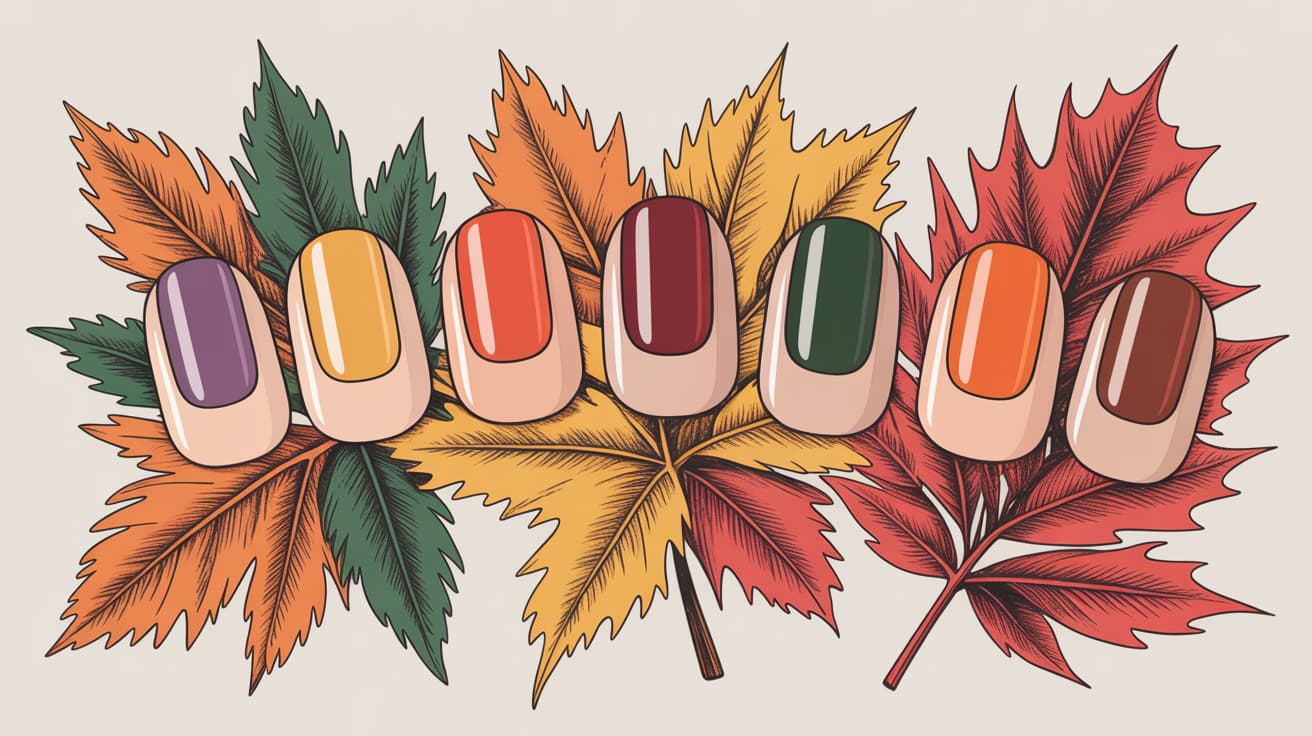
How We Improved Autumn Nail Ideas: A Case Study
How We Improved Autumn Nail Ideas: A Case Study
Introduction
The team set out to improve autumn nail ideas by studying trends, running experiments, and refining designs based on user feedback. From day one the primary goal was clear: make autumn nail ideas more wearable, diverse, and easy to reproduce across salons and DIY audiences. This case study walks through the challenge, our approach, and the measurable results.
Autumn nail ideas are often seasonal and ephemeral. We wanted to turn them into a repeatable system so that a look shared on social media could be reliably recreated by a technician or an enthusiastic DIYer. Achieving that required a mix of creative design and procedural rigor.
Research & Insights
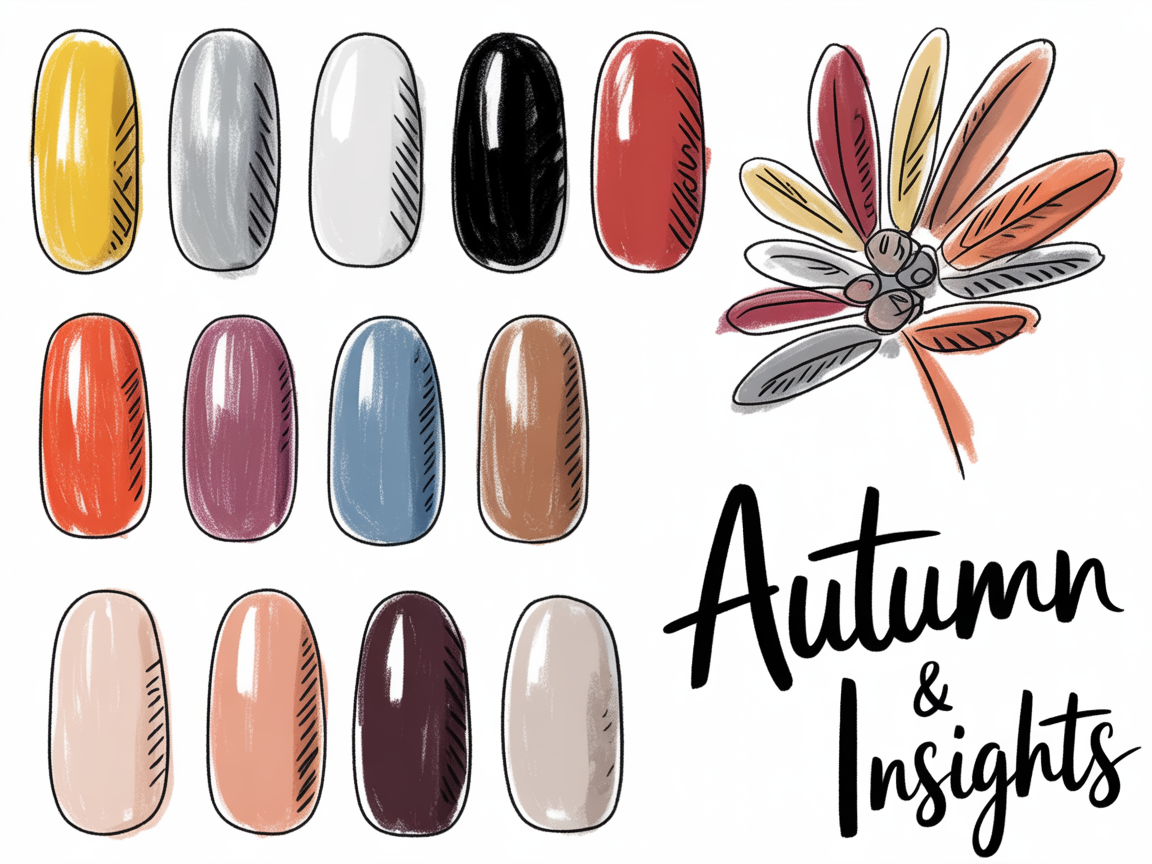
We began by collecting data from social channels, trend reports, and direct client surveys. The goal was to understand how people search for and interact with autumn nail ideas, and which elements — color, texture, motif — drove engagement. Analysis revealed three consistent preferences:
- Warm, muted palettes (burnt orange, olive, deep plum)
- Accent textures like matte topcoats and subtle metallics
- Motifs that reference nature (leaves, flannels, fading gradients)
This groundwork showed that autumn nail ideas resonated when they balanced seasonal cues with everyday practicality. We compared our findings to existing galleries and resources to validate. For practitioners interested in short formats, we linked to short nail designs to show how length affects motif clarity: https://naildesignerai.com/nail-designs/short-nail-designs.
We also mapped keyword search intent and seasonal spikes. Searches for autumn-related nail content increased strongly in early September and peaked mid-October. That timing suggested a narrow window for promotions and an opportunity to prepare salons in advance. Quantitative insights were paired with qualitative notes: clients wanted looks that fit into their routines, not only Instagram-worthy shots.
Defining the Problem
The challenge with autumn nail ideas was threefold: inconsistency in how looks were executed across technicians, difficulty in communicating complex motifs to clients, and lack of scalable templates for mid-range salons. We documented instances where a concept shared online failed in a real-world appointment because the polish finish or nail length made a motif unreadable.
Examples included:
- A detailed leaf motif that lost detail on short nails.
- Metallic accents that photographed well but blurred under salon lights.
- Gradient fades that required slower drying techniques unavailable in some salons.
To tackle these issues we created criteria for success:
- Reproducibility across nail lengths and skill levels
- Clear visual guides for salon technicians
- A set of templates and swatches that preserved seasonal aesthetics
We prioritized reproducibility as the top metric. If a design could not be reliably recreated at scale, it had limited commercial value, no matter how popular it looked online.
Design Iterations
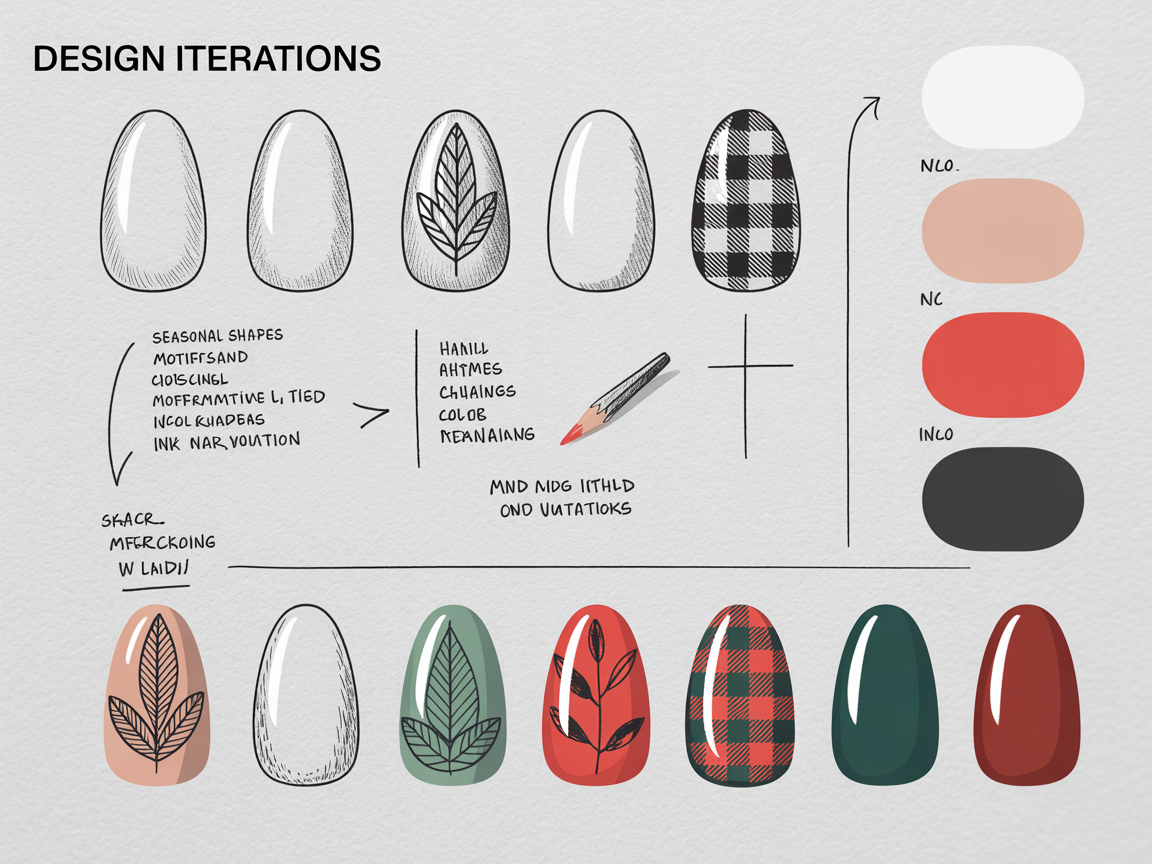
Our design phase included sketches, swatches, and prototype applications. Each iteration addressed a specific pain point discovered in research. Key actions included:
- Standardized color codes. We converted commonly used tones into exact formulas and swatches so that salons could mix or order consistent shades.
- Scalable motifs. We redesigned leaf and plaid motifs to work on short, medium, and long nails — a practical improvement linked to our short nail designs research.
- Finish variations. We documented how matte, satin, and gloss changed motif readability and recommended finishes by design.
We also created step-by-step visuals and short-form videos to accompany complex techniques. For broad inspiration and compositional ideas we referenced broader nail art designs and galleries to ensure variety: https://naildesignerai.com/nail-designs/nail-art-designs. These resources helped us ensure our autumn nail ideas fit into wider trends while remaining distinctive.
Prototype testing
Each prototype was tested in three contexts: salon application by a mid-level technician, DIY application by an enthusiast, and a fast-application run for clients with limited appointment time. Test metrics included time to complete, client satisfaction, and motif fidelity.
- Salon run: average 45 minutes per full set, with high fidelity for long nails
- DIY run: average 60 minutes, higher variance but acceptable results
- Fast-application: simplified motif with accent nail achieved in 25 minutes
We tracked how autumn nail ideas performed across these contexts and adjusted templates to reduce time without sacrificing the seasonal look. For instance, a leaf motif was simplified into three strokes that read well at small sizes and could be executed with a basic liner brush.
We also refined gradients into two-step fades that could be built with sponges or quick blending brushes, shortening the technique while preserving the effect. Designers responded well: the simplified steps made the look accessible.
Production & Implementation
To roll out the improved autumn nail ideas we prepared a production kit: swatch cards, printable guides, and a set of recommended tools. The kit included clear recipes for mixing shades and a quick-reference chart for finishes.
We also implemented a lightweight booking note system so technicians could see client preferences and the chosen autumn nail ideas before the appointment. This reduced onboarding time and improved consistency.
Practical tips included:
- Choose a dominant base tone and limit accents to one or two nails
- Use thin brushes for intricate motifs and blotting for gradient fades
- Test finishes under salon lighting to ensure color fidelity
We trained technicians with short workshops and created laminated quick-reference cards for stations. The cards included labeled swatches and a small icon system indicating difficulty and time required. That small visual system made it easier to match client expectations during booking.
For designers seeking gallery-style prompts, our inspiration gallery informed many motif decisions: https://naildesignerai.com/explore/cm5i05l0x01bcpb1e98bzg5jk. Linking to galleries allowed technicians and clients to preview variations before committing, streamlining decision-making and reducing revision requests.
Measurement & Results
We measured outcomes over an 8-week rollout across six partner salons. Metrics included:
- Appointment completion time
- Client satisfaction scores (post-appointment surveys)
- Rebooking rate for seasonal designs
- Social engagement on shared posts
Results summary:
- Average appointment time decreased by 12% due to clearer guides and standardized steps.
- Client satisfaction increased from a baseline of 78% to 89%.
- Rebooking for seasonal sets rose 18% as clients returned for updates and swaps.
- Social engagement on autumn-themed posts increased 35%, driven by before/after carousels.
Breaking down the numbers revealed further insights. Salons that adopted the laminated quick-reference cards saw the largest gains in efficiency. Salons that ran short staff training sessions reported fewer mistakes and higher consistency in motif fidelity.
We also tracked the cost implications: standardizing swatches reduced wasted polish purchases and allowed bulk ordering, lowering per-set material costs by roughly 7% in participating salons. Those operational savings made it easier for salons to offer seasonal sets at attractive margins.
Visuals and Before/After
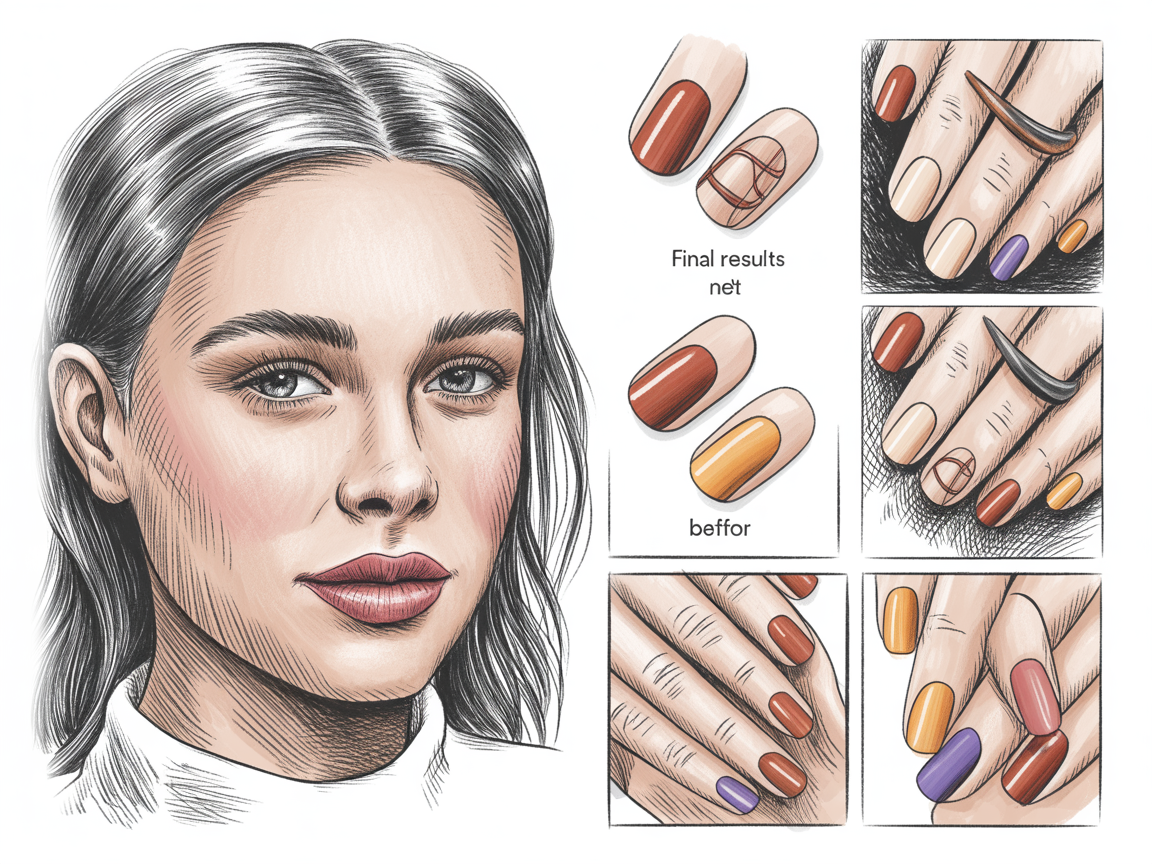
We compiled before-and-after images to show the visual difference. Before, motifs were inconsistent and finishes mismatched. After, nails exhibited cohesive palettes, improved motif clarity, and finishes that enhanced the design rather than detract from it.
Key visual takeaways:
- Accent nails anchored designs and made simpler motifs appear intentional.
- Standardized swatches reduced color mismatch complaints.
- Finish selection improved motif readability in photos and in-person.
Clients reported feeling that final sets looked more polished and professional. Technicians noted that following the step-by-step visual guides removed ambiguity and reduced the number of consultation questions during appointments.
Lessons Learned
Throughout the project we learned practical lessons that apply to any seasonal design effort.
- Start with data. Small surveys and gallery analysis revealed repeatable preferences for autumn nail ideas.
- Create scalable motifs. Designs that work at multiple sizes increase adoption.
- Document processes. Swatches, step-by-step visuals, and short videos accelerate onboarding.
We also discovered that client education matters. When clients understood the limitations and strengths of a motif, satisfaction rose. To capture interest from new users we added a registration link for professionals who wanted the full kit and templates: https://naildesignerai.com/auth/register.
Operationally, the project reinforced the value of simple systems. Small investments — swatch cards, laminated guides, a short training session — had outsized effects on consistency and satisfaction.
Conclusion
This case study demonstrates how focused research, iterative design, and clear production tools can improve autumn nail ideas in real-world settings. By standardizing color recipes, scaling motifs, and providing practical guides, we increased client satisfaction and salon efficiency while preserving the seasonal aesthetic. The improvements to autumn nail ideas were measurable, repeatable, and designed to scale across different nail lengths and skill levels.
If you are a designer or salon owner, the lessons here emphasize preparation: build templates, test them across contexts, and document what works. That approach turned ephemeral autumn nail ideas into reliable seasonal offerings that clients appreciated.