
From Problem to Solution: An Autumn Nail Ideas Case Study
autumn nail ideas can be adapted for any nail length—but short nails require particular attention to scale, contrast, and technique. This case study explores three salon-tested designs, explains why they work on short nails, and gives practical tips you can use in appointments.
Problem: The brief and constraints
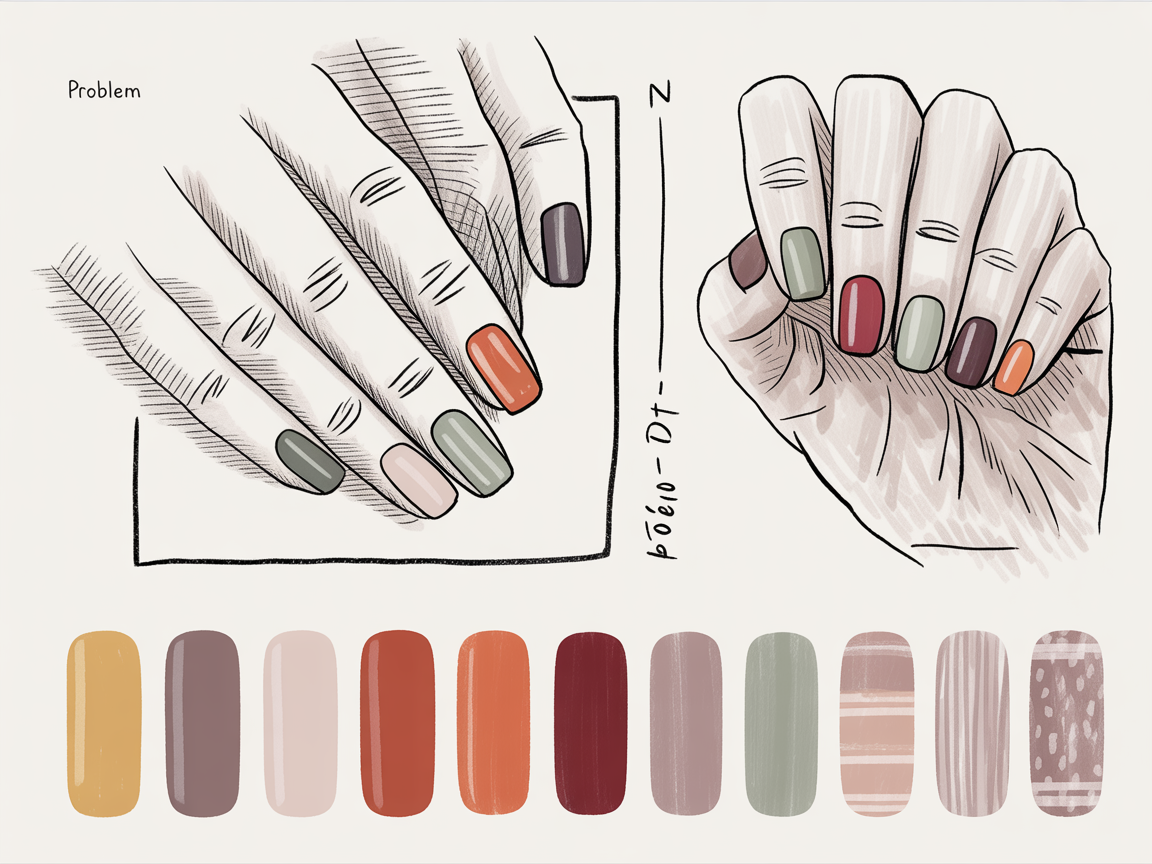
When a client asked for fresh autumn nail ideas for short nails, the brief sounded simple—but the challenges were layered. The client wanted muted, elegant colors, minimal patterns, and a look suitable for both work and weekend. We had to translate broad autumn nail ideas into a set of reproducible designs that worked on real short nail canvas, respected time constraints, and required tools commonly available in most salons.
Key constraints
- Short nail length limits the scale of motifs.
- Client preferred muted tones over bright orange or glossy metallics.
- Appointment time limited to 60 minutes.
- Budget limited for premium stamping plates or specialty glitters.
These constraints defined the problem we set out to solve: how to create stand-out autumn nail ideas that are practical, fast, and adaptable.
Research & inspiration
To start, we mapped existing autumn nail ideas that fit both aesthetic and practical needs. Research included trending palettes, nail shape considerations, and methods that scale to short nails.
- Palette choices: muted burgundy, matte olive, burnt sienna, muted gold, and cream neutrals.
- Motif scale: small leaf accents, negative-space crescent moons, and slim ombrés.
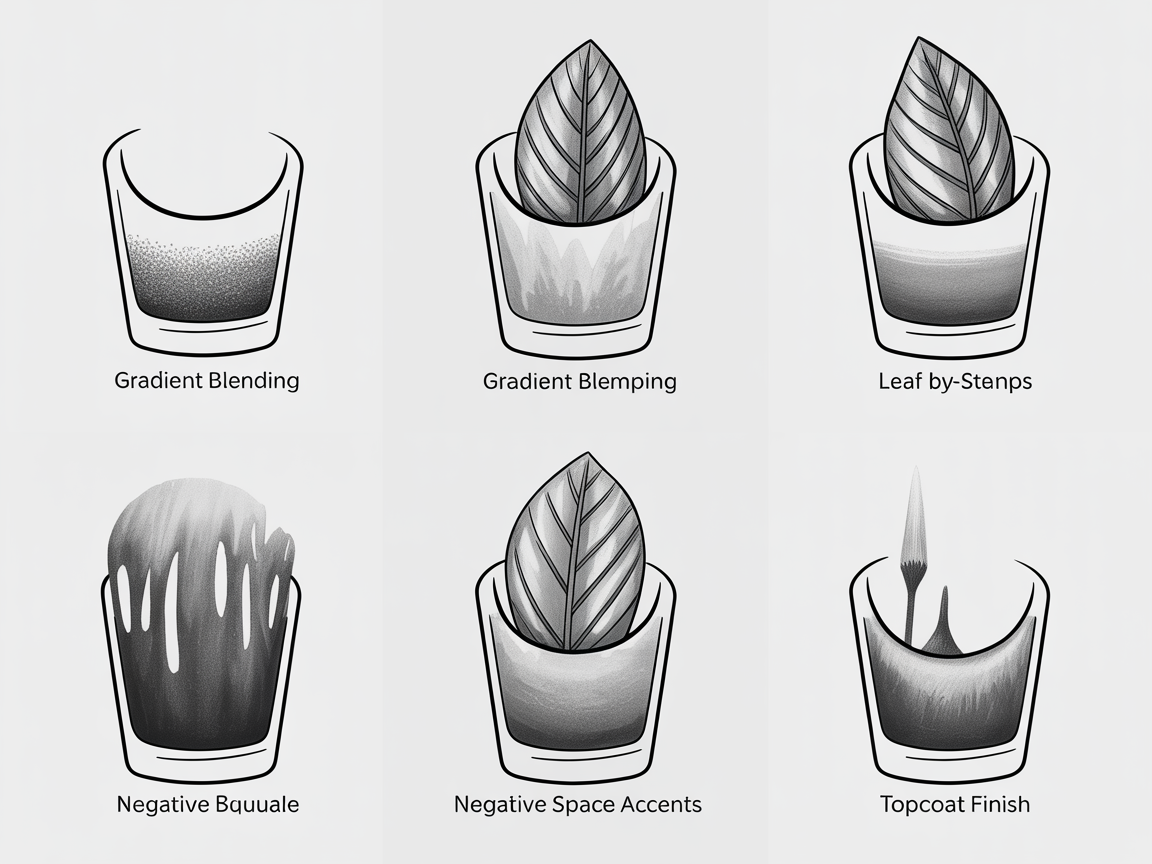
- Techniques: gradient sponging, simple stamping, hand-painted tiny leaves, and matte topcoats.
We reviewed similar designs on the site for ideas and compatibility. For client-friendly tutorials and inspiration, we referenced related designs and guides to expand the toolkit:
- Vacation-style nail concepts that show how ombré techniques can be adapted for different palettes (https://naildesignerai.com/nail-ideas/vacation-nail-ideas).
- Easy, quick designs suitable for short sessions that emphasize minimal patterns (https://naildesignerai.com/nail-ideas/easy-nail-ideas).
- Light pink and neutral references to balance strong autumn tones with soft accents (https://naildesignerai.com/ru/nail-ideas/light-pink-nail-ideas).
- Contrast and texture ideas that inform matte vs. gloss choices (https://naildesignerai.com/blog/black-and-white-nail-art).
Collecting these references helped us develop a direction that balanced trend with feasibility. The next step was to translate inspiration into concrete, testable solutions for autumn nail ideas.
Solution: autumn nail ideas techniques and step-by-step process
To meet the brief, we designed three primary autumn nail ideas tailored for short nails. Each design targets a different level of complexity and time investment so the client could choose based on appointment length or preference.
Design A — Muted Gold & Burgundy Accent (20–30 minutes)
Goal: a sophisticated, work-appropriate autumn nail idea that reads elegant on short nails.
Steps:
- Prep: brief buffing and base coat.
- Base: two thin coats of a muted burgundy lacquer.
- Accent nail: use a metallic muted gold in a thin diagonal or crescent at the free edge.
- Finish: glossy topcoat on accent; matte topcoat on other nails for contrast.
Why it works: The small metallic accent provides autumn shimmer without overpowering short nail proportions. Matte vs. gloss contrast adds visual interest efficiently.
Design B — Pumpkin Ombre with Tiny Leaf Accent (35–45 minutes)
Goal: bring a clear autumn motif to short nails while keeping the leaf scale minimal.
Steps:
- Base: apply a sheer nude.
- Ombre: sponge a subtle gradient from warm cream to pumpkin orange on two nails.
- Accent: with a fine brush, paint a tiny single leaf on the ring finger using olive or burnt sienna.
- Seal: thin glossy topcoat to smooth texture.
This autumn nail idea relies on scaled-down motifs and color gradients to evoke the season without large surface area.
Design C — Matte Olive with Minimal Leaf Stamping (25–35 minutes)
Goal: create a modern, understated autumn nail idea that feels curated.
Steps:
- Base: two coats of matte olive polish.
- Stamp: use a small leaf stamping plate or hand-paint a tiny corner leaf in cream.
- Edge detail: barely-there gold pinstripe on the thumb.
- Seal: matte topcoat to preserve the modern finish.
This design uses negative space and texture to make an impact on short nails.
Tools, materials, and time-saving setups
To reliably reproduce these autumn nail ideas, assemble a small kit prioritizing speed and consistency.
Essential tools:
- Two flexible silicone sponges for ombré.
- A fine liner brush for tiny leaves.
- One small stamping plate with micro leaf patterns.
- Matte and glossy topcoats, and a thin metallic polish.
Time-savers:
- Pre-mix two ombré blends in small palettes.
- Keep a staging tray with base and topcoat ready.
- Use peel-off tape to protect skin during sponging and reduce cleanup time.
These setups reduce appointment time and maintain finish quality, key for delivering autumn nail ideas under tight schedules.
Implementation, testing, and troubleshooting
We tested each autumn nail idea across three clients with short natural nails. Tests focused on visual impact, time, and durability under daily use.
Troubleshooting common issues:
- Bumpy ombré: thin your polish slightly or use a makeup sponge to soften texture.
- Stamping misalignment: stabilize the hand with the opposite thumb and practice positioning on a fake nail first.
- Matte topcoat drag: apply thin layers and let fully cure between coats.
Testing notes:
- Design A consistently finished within 30 minutes with a standard dryer, and the matte/gloss combo drew positive feedback for sophistication.
- Design B required practice on sponging to keep ombré soft; using a silicone sponge and well-thinned polish reduced textural bumps.
- Design C was fastest but demanded precise stamping alignment for professional results.
Comparing to other tutorials and gallery pieces reinforced which autumn nail ideas translate best to real-world salon flow (see related work in our easy ideas gallery: https://naildesignerai.com/nail-ideas/easy-nail-ideas).
Outcome: results, client reactions, and performance
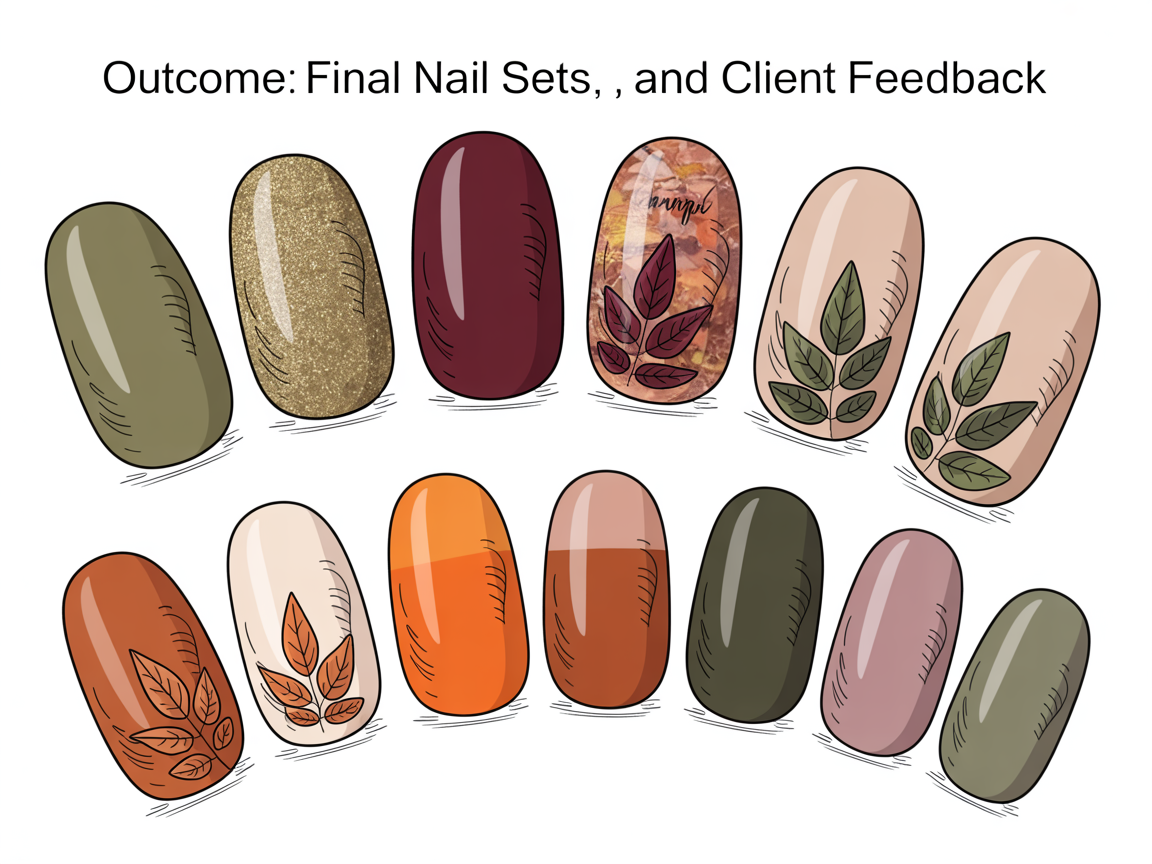
Across clients, the three autumn nail ideas achieved the brief in different ways:
- Client A (professional setting): chose Design A and reported the muted gold accent felt professional and seasonal.
- Client B (creative role): preferred Design B for a clear seasonal motif; she liked the ombré on short nails.
- Client C (minimalist): selected Design C; praised the matte finish and tiny leaf detail.
Performance notes:
- All designs held up well for 7–10 days with careful use. Occasional topcoat reapplication extended shine on glossy areas.
- The small scale of motifs reduced tip wear visibility—important for short nails.
Cost and booking implications:
- Design A and C fit well into standard pricing tiers due to low-product use and quick execution.
- Design B may require a slightly higher price point or time slot to account for sponging practice and cleanup.
Customization and variations
Offering options helps clients personalize autumn nail ideas without adding significant time.
Simple swaps:
- Replace pumpkin orange with muted terracotta for a more subdued palette.
- Swap metallic gold accent for a micro foil or warm bronze for texture.
- Offer glossy accent nails in Design A instead of matte contrast for a different visual emphasis.
Client-specific tweaks keep autumn nail ideas fresh and tailored while using the same basic process.
Pro tips for reproducibility and training junior techs
Teaching junior technicians to reproduce autumn nail ideas reliably reduces mistakes and speeds up service. We use short checklists and quick practice drills to build muscle memory.
Training steps:
- Drill: 10-minute ombré session focusing on pressure control and polish thinning.
- Stamp practice: align three tiny leaf patterns on practice tips before working on clients.
- Finishing: practice applying a thin matte topcoat in one smooth motion to avoid streaks.
Checklists on the station help junior techs follow the same order of operations and maintain consistent timing across appointments.
Client care, maintenance, and aftercare tips
To maintain the look and extend wear:
- Recommend light oiling of the cuticle daily to prevent lifting.
- Suggest a quick topcoat touch-up at day 5 for clients who want extended gloss.
- For matte finishes, advise avoiding heavy oil-based products that can alter texture.
These small instructions can significantly improve client satisfaction with autumn nail ideas.
Selling the look and describing value
When presenting autumn nail ideas, language matters. Use descriptive phrases that convey quality and purpose:
- “Muted burgundy with metallic accents” sounds more premium than “dark red with gold.”
- Explain why small motifs suit short nails to set realistic expectations.
- Offer a “seasonal upgrade” option for clients who want the ombré or stamping—this helps capture incremental revenue.
Final notes and additional resources
To continue developing season-specific autumn nail ideas, keep a simple log of client preferences and which tweaks performed best. Small notes on shade formulas, sponge pressure, and stamping plates save time long-term and improve repeatability.
For further reading and visual references, check our gallery and tutorial collections like the vacation and easy ideas sections (https://naildesignerai.com/nail-ideas/vacation-nail-ideas and https://naildesignerai.com/nail-ideas/easy-nail-ideas).
Conclusion
This case study demonstrates how thoughtful constraints can lead to better autumn nail ideas. By prioritizing scale, texture, and efficient techniques, we turned a restrictive brief into three practical designs that clients loved. Focus on small accents, muted palettes, and repeatable steps to deliver polished, seasonal results every time.